- Home Page
- | Galleries ▼
- | Blog ▼
- | About
- | Contact
Eurostarstruck: The Chateau of Vaux-le-Vicomte, 29 September 2025
Vaux-le-Vicomte was the second chateau on our tour. It was half a hour’s bus ride from Fontainebleau. I had wanted to go there because it had been the predecessor of the immense Palace of Versailles. I had read that it had comparable aesthetic merit. And I was reluctant to brave the crowds at Versailles. That is a site that I had once explored, long before Versailles was overrun by the approximately eight million tourists per year that it receives today.
Nicolas Fouquet was King Louis XIV’s finance minister. Fouquet used some of his great wealth to buy an estate with a derelict castle. In 1661, he hired an architect and a landscape designer to transform the property into an imposing chateau with elaborate formal gardens.
Fouquet fell from favor after his rivals at court turned the king against him. His chateau also aroused royal jealousy. In a vain effort to avoid arrest, Fouquet made the king a gift of Vaux-le-Vicomte. The gesture did not save the hapless minister, though the king accepted the property with alacrity. Fouquet was arrested, tried by his enemies, and condemned to prison, where he died. Louis XIV admired his ill-gotten chateau so much that he used the same architect, Le Vau, and the same landscaper, Le Nôtre, to work on the king's own later, more grandiose country residence at Versailles.
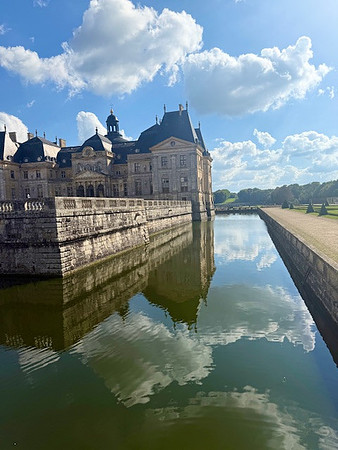

A rectangular moat surrounds the chateau.
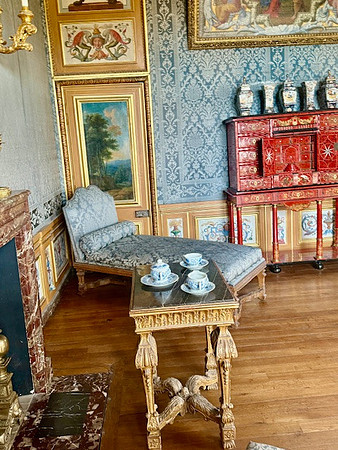
There were few restored, furnished rooms in the chateau. Vaux-le-Vicomte did not fare well after the French Revolution. It was in poor condition in 1875, when it was purchased by a merchant who had made his fortune in the sugar trade. His descendants still own the chateau. Their foundation oversees the ongoing restoration.
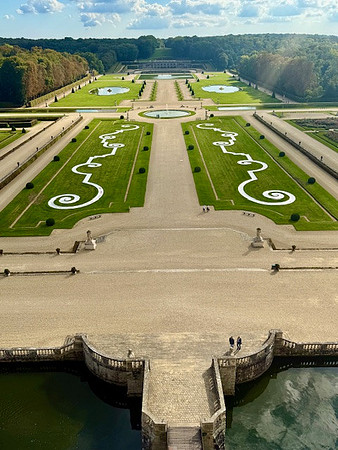
The original lines of boxwood hedges no longer graced the formal garden. In their place were what appeared to be a pair of long metal ribbons where once the symmetrical shrubbery had flourished. Viewed from the terrace, the ribbons shimmered like a pair of curling, narrow mirrors reflecting the sky. In fact, the ribbons were composed of 390 rectangular, identically sized aluminum plaques laid precisely end to end, components of a permanent installation called Rubans Ephémères
(Ephemeral Ribbons). The French designer Patrick Hourcade completed it in 2019.
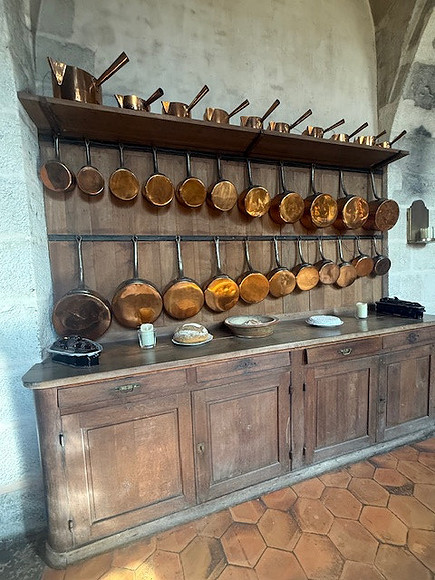
The food for the chateau's owners and their guests had been prepared in the cellar kitchens. The servants also dined there.
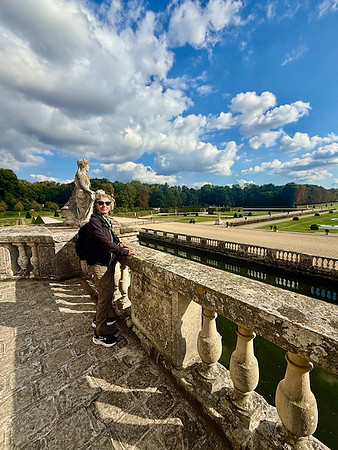
Miri was looking over the parterres from the chateau's terrace when I asked her to turn towards me for this picture.

Comments
|
January
February
March
April
May
(3)
June (3)
(1)
July (1)
August
September
October
November
(1)
December (1)
|
(7)
January (7)
(1)
February (1)
(1)
March (1)
April
May
(3)
June (3)
July
August
September
October
November
December
|
January
February
(2)
March (2)
(4)
April (4)
(5)
May (5)
(4)
June (4)
(5)
July (5)
(4)
August (4)
(4)
September (4)
(3)
October (3)
November
December
|
January
February
March
April
May
June
July
August
September
October
November
December
|
(1)
January (1)
(4)
February (4)
(5)
March (5)
(4)
April (4)
(4)
May (4)
(5)
June (5)
(4)
July (4)
(4)
August (4)
(5)
September (5)
(4)
October (4)
(4)
November (4)
(4)
December (4)
|
(4)
January (4)
(4)
February (4)
(1)
March (1)
April
(4)
May (4)
(5)
June (5)
(4)
July (4)
(3)
August (3)
(3)
September (3)
(1)
October (1)
November
December
|
(5)
January (5)
(4)
February (4)
(4)
March (4)
(4)
April (4)
May
(3)
June (3)
(4)
July (4)
(4)
August (4)
(4)
September (4)
(3)
October (3)
(4)
November (4)
(4)
December (4)
|
(3)
January (3)
(1)
February (1)
March
(1)
April (1)
May
(4)
June (4)
(4)
July (4)
(4)
August (4)
(1)
September (1)
October
November
(1)
December (1)
|
(4)
January (4)
(4)
February (4)
(4)
March (4)
(3)
April (3)
(2)
May (2)
(1)
June (1)
July
August
September
October
November
December
|