- Home Page
- | Galleries ▼
- | Blog ▼
- | About
- | Contact
Escape to New York, 3: Two Museums, No Waiting, 17 April 2026
Though it would be difficult for me to choose a favorite among my beloved, familiar New York museums, I reserve a particular affection for the Frick Collection. It was one of the places where I would meet my friends frequently when I was a girl. As an undergraduate, I would walk to Fifth Avenue to spend a few hours between classes at The Frick. It was closed for renovation for four years, reopening early in 2025. I was anxious to see what had been done to the hybrid Beaux-Arts and Italianate Renaissance Revival mansion.
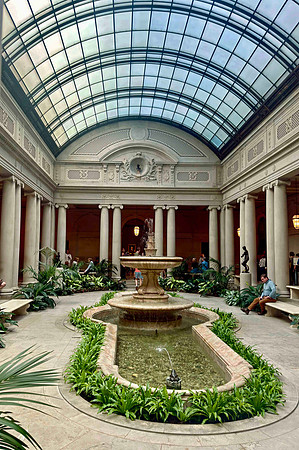

The Frick Collection prohibits photography everywhere except in the atrium. It is not a new policy, though I had not remembered it as having been in force. To my relief, the courtyard and its fountain appeared unchanged. Exhibition spaces had been added, but I found my favorite paintings hanging in the opulently furnished rooms where they had been all my life. These included two Hans Holbeins and three Vermeers that had presided like deities over my education in the Fine Arts.
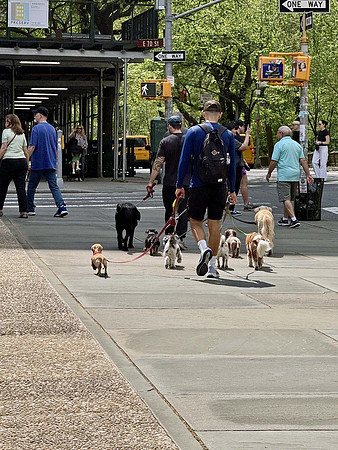
Having regained our subway legs, HL and I increased our transit system expertise that afternoon when we took the crosstown bus. We were bound for the Museum of Modern Art. It was still very hot. The dogwalkers were back in their Summer outfits. They attempted, with varying degrees of success, to prevent their panting canine charges from becoming entangled in their leashes.
I began my acquaintance with The Museum of Modern Art in childhood, even before it was known as MoMA. There are two spellbinding jungle paintings by Henri Rousseau in MoMA's permanent collection. On this visit, I took a picture of the one most prominently displayed, The Dream.
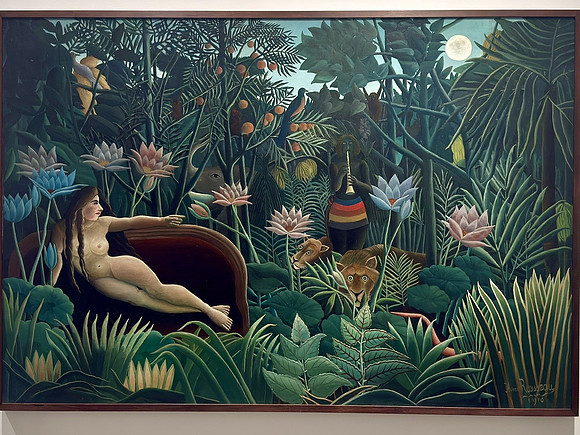
La Rêve (The Dream) was the last, and largest, of Rousseau's paintings with a fantastic tropical setting. It was completed in 1910.
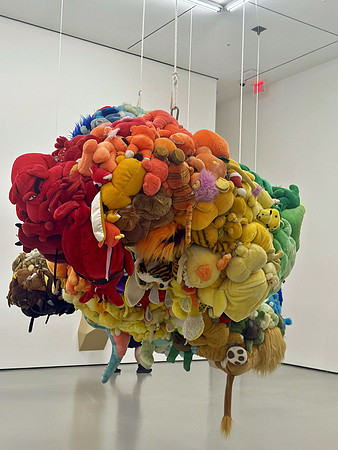
I was pleased that the museum was fairly empty, so we had time to tour the permanent as well as the temporary exhibitions. There was an installation of soft sculptures by Mike Kelley. It was entitled Deodorized Central Mass with Satellites 1991/1999. Agglomerations of plush animals suspended from the ceiling hinted at adults' commercialized sentiments regarding childhood innocence. Kelley was a key Conceptual artist and critic of consumerist hypocrisy. And I suspect that Kelley enjoyed working with the mass-produced stuffed animals because they are nothing if not tempting to touch.

Comments
|
January
February
March
April
May
(3)
June (3)
(1)
July (1)
August
September
October
November
(1)
December (1)
|
(7)
January (7)
(1)
February (1)
(1)
March (1)
April
May
(3)
June (3)
July
August
September
October
November
December
|
January
February
(2)
March (2)
(4)
April (4)
(5)
May (5)
(4)
June (4)
(5)
July (5)
(4)
August (4)
(4)
September (4)
(3)
October (3)
November
December
|
January
February
March
April
May
June
July
August
September
October
November
December
|
(1)
January (1)
(4)
February (4)
(5)
March (5)
(4)
April (4)
(4)
May (4)
(5)
June (5)
(4)
July (4)
(4)
August (4)
(5)
September (5)
(4)
October (4)
(4)
November (4)
(4)
December (4)
|
(4)
January (4)
(4)
February (4)
(1)
March (1)
April
(4)
May (4)
(5)
June (5)
(4)
July (4)
(3)
August (3)
(3)
September (3)
(1)
October (1)
November
December
|
(5)
January (5)
(4)
February (4)
(4)
March (4)
(4)
April (4)
May
(3)
June (3)
(4)
July (4)
(4)
August (4)
(4)
September (4)
(3)
October (3)
(4)
November (4)
(4)
December (4)
|
(3)
January (3)
(1)
February (1)
March
(1)
April (1)
May
(4)
June (4)
(4)
July (4)
(4)
August (4)
(1)
September (1)
October
November
(1)
December (1)
|
(4)
January (4)
(4)
February (4)
(4)
March (4)
(3)
April (3)
(2)
May (2)
(1)
June (1)
July
August
September
October
November
December
|